










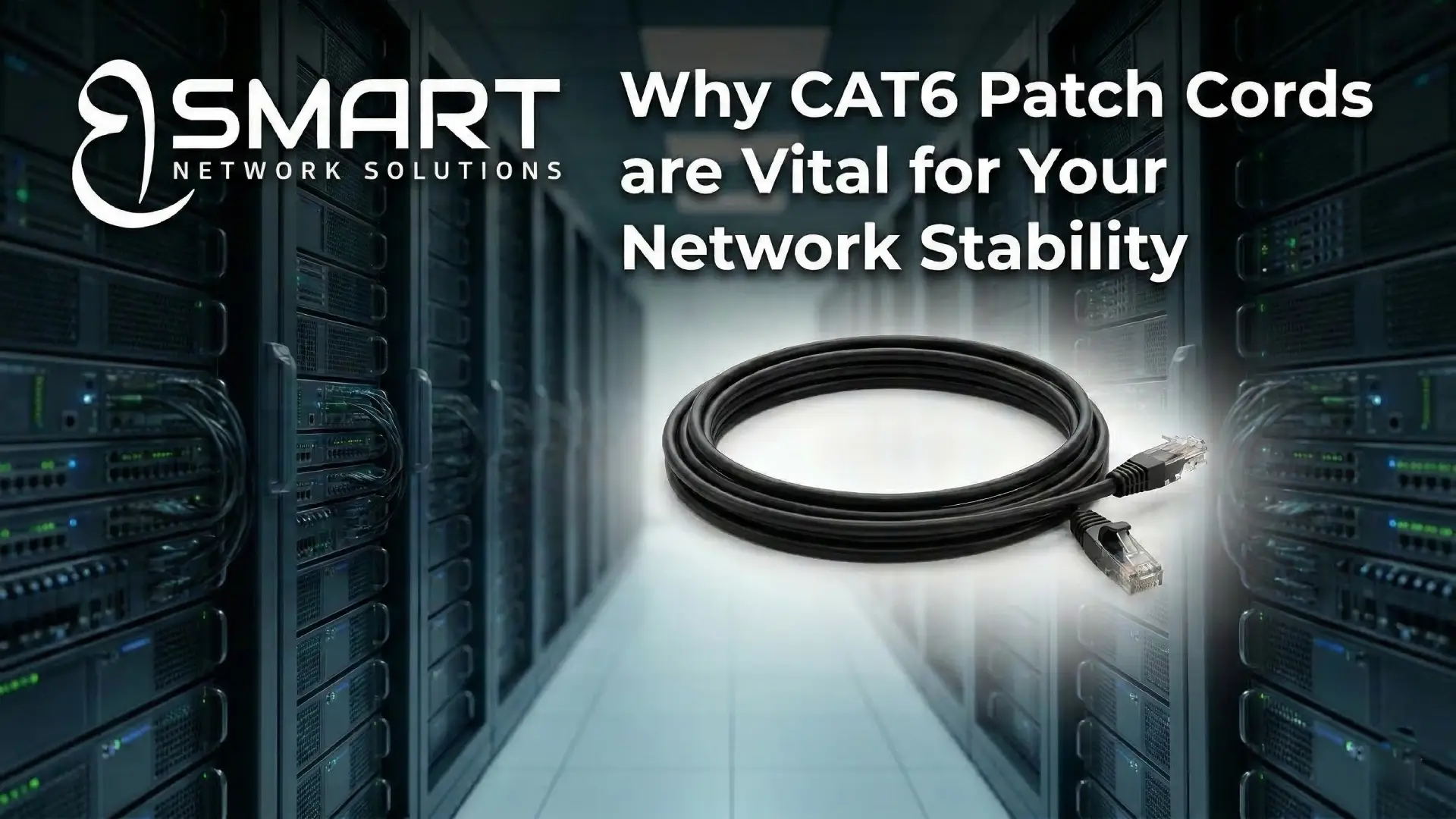
Why CAT6 Patch Cords are Vital for Your Network Stability

Modern businesses rely on stable networks to run operations, connect teams, and manage digital infrastructure. A small component like a patch cord may seem minor, yet it often determines whether your network performs reliably or constantly suffers from packet loss and latency.
Understanding why CAT6 patch cords are vital for your network stability is essential for IT managers, procurement teams, and system integrators building structured cabling systems in Egypt.
In structured networks, patch cords are the final link between patch panels, switches, and end devices. When these cables are poorly made or incorrectly specified, they introduce signal loss, interference, and inconsistent connectivity.
This guide explains how CAT6 patch cords work, what makes them reliable, and how to choose the right option for Egyptian enterprise environments.
What is a CAT6 Patch Cord?
A CAT6 patch cord is a short Ethernet cable designed to connect network devices within structured cabling systems.
Unlike horizontal cabling installed inside walls or ceilings, patch cords provide flexible connections between:
- Patch panels and network switches
- Switches and servers
- Workstations and wall outlets
- Network devices inside server racks
They typically come in lengths between 0.5 to 5 meters, making them ideal for organized rack environments and office workstations.
Key Components of a CAT6 Patch Cord
A reliable CAT6 patch cord contains several engineered elements that ensure stable data transmission:
- 24 AWG copper conductors for high signal quality
- Twisted pair structure to reduce electromagnetic interference
- RJ45 connectors designed for Gigabit Ethernet performance
- PVC or LSZH jackets for durability and safety
Compared to older CAT5e cables, CAT6 cords are designed to support higher bandwidth and reduced crosstalk, which directly improves network stability.
How CAT6 Patch Cords Work in Structured Networks
Understanding how CAT6 patch cords work helps explain their role in overall network performance.
Ethernet data travels through twisted copper pairs inside the cable. Each pair carries electrical signals that represent data packets.
The twisting pattern reduces signal interference, while the cable category standard ensures it can handle specific bandwidth levels.
Signal Transmission Principles
CAT6 cables are designed to support:
- 1 Gbps Ethernet up to 100 meters
- 10 Gbps Ethernet up to 55 meters
- Bandwidth up to 250 MHz
Within server racks or network cabinets, patch cords connect switches to patch panels. These connections are responsible for routing traffic between network segments.
If patch cords are poorly shielded or poorly terminated, the network may experience:
- Increased packet loss
- Network jitter
- Slower application performance
- Intermittent disconnections
This is why professional network installations prioritize certified patch cords instead of low-grade generic cables.
Why CAT6 Patch Cords Are Vital for Your Network Stability
Even if your switches and servers are enterprise-grade, weak patch cords can create hidden performance bottlenecks.
Here are the main reasons CAT6 patch cords play a critical role in network stability.
Buy: ProLink CAT6 Patch cord, 0.25m,LSZH Black – SKU: PL-PC-U6-0.25BK.
1. Reduced Crosstalk and Signal Interference
CAT6 cables feature tighter twists and internal separators that reduce Near-End Crosstalk (NEXT).
Lower interference means:
- More stable connections
- Better data integrity
- Fewer retransmissions
This is especially important in high-density server racks where many cables run close together.
2. Consistent Gigabit Performance
A high performance CAT6 patch cable ensures stable Gigabit Ethernet communication between devices.
When businesses deploy:
- IP cameras
- VoIP systems
- cloud-connected workstations
- virtualization servers
the network must handle constant traffic without interruption.
CAT6 patch cords maintain consistent throughput under these loads.
3. Reliable Connections in Server Racks
Inside racks, network cables often bend, move, and get reconfigured during maintenance.
Quality patch cords offer:
- Molded connectors
- Strain relief boots
- Durable jackets
These features prevent connector failure and cable damage during frequent network changes.
4. Future-Ready Network Infrastructure
Many Egyptian companies still operate mixed infrastructures that include older CAT5e segments.
Deploying CAT6 patch cords helps prepare networks for future upgrades like:
- 10 Gigabit switching
- High-density WiFi deployments
- large data transfers
- video conferencing systems
Upgrading patch cords is often the simplest step toward future-proof networking.
Shielded vs Unshielded CAT6 Patch Cord
One of the most common procurement questions is whether to choose shielded vs unshielded CAT6 patch cord.
The answer depends on the environment.
Unshielded CAT6 (UTP)
UTP cables are the most common choice for office networks.
Advantages include:
- Lower cost
- Flexible cable management
- Easier installation
UTP patch cords work well in:
- offices
- small server rooms
- standard enterprise networks
Shielded CAT6 (STP)
Shielded patch cords include foil or braided shielding to block electromagnetic interference.
They are recommended in environments with:
- heavy electrical equipment
- industrial machinery
- data centers with dense cabling
Shielded cables improve signal quality when interference is a concern.
However, they require proper grounding to function correctly.
Read: Prolink Network Products.
Buying Factors When Choosing CAT6 Patch Cords
IT buyers often focus on price, but quality factors have a direct impact on network reliability.
When evaluating patch cords, consider the following:
Cable Construction
Look for:
- 100% pure copper conductors
- Avoid CCA (Copper Clad Aluminum) cables
- Certified CAT6 standards
Copper conductors provide better signal quality and durability.
Connector Quality
High-quality RJ45 connectors ensure stable connections.
Important features include:
- Gold-plated contacts
- Molded strain relief
- Tight connector housing
Cheap connectors often loosen over time.
Cable Jacket Type
Choose jacket types based on installation environment.
Common options:
- PVC for standard indoor use
- LSZH (Low Smoke Zero Halogen) for data centers and safety-sensitive environments
LSZH cables produce less toxic smoke during fires.
Cable Length Planning
Avoid excessive cable slack in server racks.
Use short patch cords like:
- 0.5m
- 1m
- 2m
This improves airflow and rack organization.
Egyptian Market Insight: Why Local Supply Matters
One challenge many Egyptian businesses face when buying networking components is inconsistent product quality in the local hardware market.
Imported patch cords sold through unofficial channels may:
- Use copper-clad aluminum instead of pure copper
- Lack proper category certification
- Have inconsistent connector quality
These issues often lead to network instability months after installation.
Working with authorized local suppliers ensures:
- product authenticity
- manufacturer warranty
- consistent supply for large projects
For system integrators and contractors, reliable local sourcing also reduces deployment delays.
Expert Insight from BSMART Networks
“Many companies invest heavily in switches and servers but underestimate the role of patch cords. In hot climates like Egypt, cable quality directly affects network stability and cooling efficiency. Poor cables create signal errors that force devices to retransmit data, increasing CPU load and heat inside racks.”
— Internal Networking Infrastructure Specialist, BSMART
This is why experienced system integrators treat patch cords as critical infrastructure components, not disposable accessories.
Choosing a Reliable CAT6 Patch Cord Supplier
When selecting a vendor, businesses should look for more than just competitive pricing.
Reliable suppliers offer:
- certified networking products
- technical consultation
- consistent stock availability
- after-sales support
For many enterprises and integrators in Egypt, sourcing from trusted distributors ensures long-term reliability.
Prolink CAT6 Patch Cord Solutions from BSMART
BSMART Networks has more than 15 years of experience in networking infrastructure across Egypt and the Middle East.
The company supplies certified Prolink CAT6 patch cord solutions designed for enterprise networks, data centers, and structured cabling projects.
Benefits include:
- High-quality copper conductors
- Durable molded connectors
- Multiple length options
- Compliance with international cabling standards
Businesses that require Bsmart Prolink products gain access to reliable networking components backed by professional support.
BSMART also offers a wide range of Bsmart networking cables, enabling organizations to build scalable structured cabling systems.
Where to Buy CAT6 Patch Cords in Egypt
Businesses looking to buy CAT6 patch cords should prioritize suppliers that provide genuine, certified products.
Working with experienced networking distributors ensures:
- guaranteed product authenticity
- better technical guidance
- reliable project delivery timelines
For enterprise networks and system integrators, selecting trusted vendors helps prevent costly network issues caused by low-quality cabling.
Final Thoughts
Network stability is rarely determined by a single device. Instead, it depends on the reliability of every component within the infrastructure.
Patch cords may appear simple, but they directly influence signal quality, data integrity, and overall performance.
Understanding why CAT6 patch cords are vital for your network stability helps businesses make informed purchasing decisions that protect their infrastructure.
For organizations building or upgrading structured networks in Egypt, investing in certified CAT6 patch cords is one of the most practical steps toward achieving long-term network reliability.