











Single Section vs Double Section Wall Mount Racks: The Ultimate Buyer’s Guide

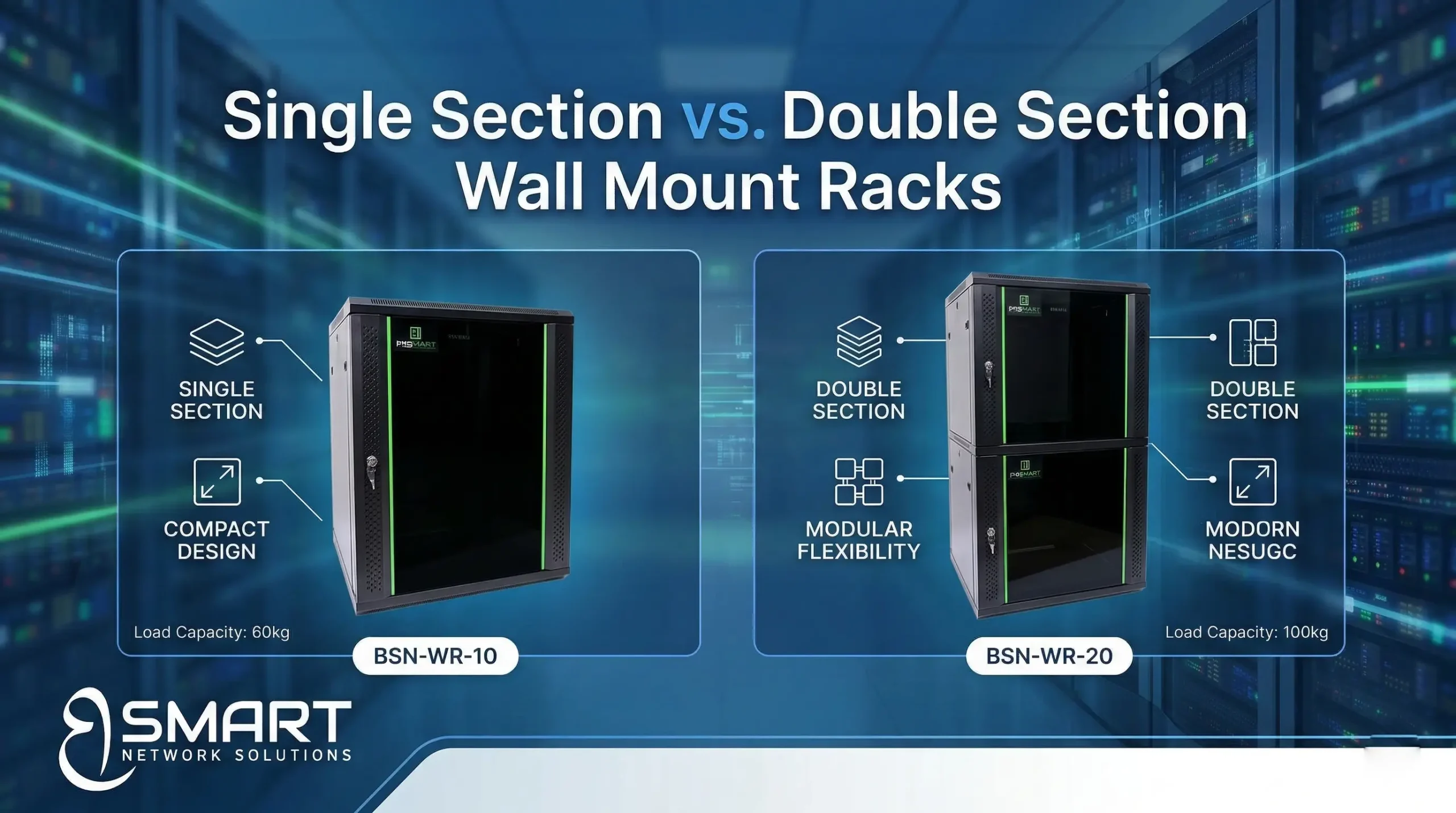
Choosing the right wall mounted rack is a critical decision when designing a reliable IT infrastructure. Many businesses comparing single section vs double section wall mount racks are trying to balance space efficiency, equipment protection, cable management, and long-term scalability.
For companies in Egypt—where server rooms are often small and cooling conditions can vary—the rack structure directly impacts equipment performance and maintenance efficiency. Understanding the difference between these two rack types helps IT managers choose the best solution for switches, patch panels, routers, and small servers.
This buyer’s guide explains how both rack types work, their advantages, and which one fits your business network environment.
What is a Single Section Wall Mount Rack?
A single section wall mount rack is a compact network cabinet designed with a fixed structure. The front door opens, but the rack body remains attached to the wall.
These racks are widely used for small and medium IT setups where space is limited and equipment access from the rear is not frequently required.
Key Characteristics
- Fixed cabinet structure mounted directly to the wall
- Front access through a lockable door
- Compact depth suitable for switches and patch panels
- Lower cost compared to double section racks
Typical Equipment Installed
Single section racks are commonly used for:
- Network switches
- Patch panels
- Routers
- CCTV NVR systems
- Small firewalls
Advantages of Single Section Racks
Space efficiency
These racks are ideal for offices where wall space is limited.
Lower cost
They are typically more affordable, making them suitable for small business networks.
Simple installation
Because the cabinet structure is fixed, installation and mounting are straightforward.
Limitations
The main drawback is rear accessibility. If cables or devices need adjustments from the back, technicians may need to remove equipment from the rack.
For environments with frequent maintenance, this can slow down troubleshooting.
What is a Double Section Wall Mount Rack?
A double section wall mount rack is designed with a hinged rear frame that allows the cabinet to swing open from the wall.
This design gives technicians full access to the back of installed equipment without removing the rack from the wall.
Key Characteristics
- Two structural sections (wall frame + equipment frame)
- Hinged mechanism for rear access
- Better cable management capabilities
- Deeper cabinet structure
Advantages of Double Section Racks
- Easy maintenance: Technicians can open the rack and access rear connections instantly.
- Improved cable management: Rear space allows cleaner cable routing and easier troubleshooting.
- Better airflow management: The additional space supports better ventilation, which is important in warm environments.
- Higher equipment capacity :Double section racks typically support deeper devices and heavier loads.
Common Use Cases
Double section racks are often deployed in:
- Corporate network rooms
- Data communication closets
- Security monitoring systems
- Small data center environments
- Managed office networks
Difference Between Single Section vs Double Section Rack
When evaluating the difference between single section and double section rack designs, the main factor is accessibility and scalability.
| Feature | Single Section Rack | Double Section Rack |
|---|---|---|
| Structure | Fixed cabinet | Hinged dual frame |
| Rear Access | Limited | Full rear access |
| Maintenance | Harder for cable work | Easy maintenance |
| Cooling Space | Limited | Better airflow |
| Equipment Depth | Suitable for shallow devices | Supports deeper equipment |
| Cost | Lower | Slightly higher |
Which One is Better?
The answer depends on the network environment.
- Small offices often prefer single section racks.
- Growing businesses or structured networks benefit more from double section racks.
Key Buying Factors for Wall Mount Network Racks
When selecting the best wall mount network rack for your infrastructure, several technical factors should guide the decision.
Read: https:Wall Mounted vs Standing Racks.
1. Rack Size (U Height)
Network racks are measured in rack units (U).
Common wall-mounted sizes include:
- 6U – small network cabinets, such as ProRack 6U cabinet, designed for minimal setups like basic home offices or single-switch deployments.
- 9U – such as ProRack 9U cabinet, Ideal for compact office networks requiring a balance between size and device capacity.
- 12U – medium network setups, Built for medium network setups hosting multiple switches, patch panels, and power units.
- 15U – 18U – larger structured networks
Choosing the correct height ensures enough space for future expansion.
2. Rack Depth
Depth determines which devices the rack can support.
Typical depths include:
- 450 mm – suitable for switches and patch panels
- 600 mm – common enterprise network depth
- 800 mm or more – supports deeper devices and cable management
For businesses planning future upgrades, deeper racks provide more flexibility.
3. Cooling and Ventilation
Proper airflow is essential for protecting network equipment.
Look for racks that include:
- Ventilated doors
- Fan mounting positions
- Cable entry openings for airflow
In Egypt’s warm climate, ventilation becomes even more important. Poor airflow inside a rack can shorten equipment lifespan and increase network downtime.
Internal Networking Expert Insight:
“Many businesses focus on switches and servers but ignore the rack design. A well-ventilated rack can significantly reduce equipment heat buildup. In hot environments like Egypt, this directly lowers cooling costs and extends hardware life.”
4. Security and Access Control
Network infrastructure contains critical data connections.
Good rack security includes:
- Lockable front doors
- Side panel locks
- Strong steel construction
- Anti-tamper mounting
This prevents unauthorized access to network devices.
5. Cable Management
A clean rack layout improves reliability and troubleshooting.
Important features include:
- Removable cable entry panels
- Side cable channels
- Space for vertical cable managers
- Rear cable access (in double section racks)
Choosing the Right Wall Mount Rack for Business Networks
When selecting a wall mount rack for business network infrastructure, the decision often depends on three operational factors.
Network Complexity
Simple setups with few devices usually work well with single section racks.
However, structured networks with patch panels, fiber modules, and multiple switches benefit from double section designs.
Maintenance Frequency
If your IT team regularly modifies network connections, rear access becomes essential.
Double section racks reduce maintenance time significantly.
Future Expansion
Many businesses underestimate how quickly networks grow.
Choosing a slightly larger rack or a double section cabinet can prevent costly replacements later.
Egyptian Market Insight: Availability, Warranty, and Local Support
One challenge many IT buyers face in Egypt is hardware availability and warranty coverage.
Imported network cabinets often arrive through unofficial channels. While prices may seem lower, warranty support can be unreliable.
Buying from a local authorized supplier offers key advantages:
- Verified product quality
- Manufacturer warranty coverage
- Local spare parts availability
- Faster delivery times
- Technical consultation
This is especially important for infrastructure components like racks that are expected to last 10–15 years.
Why Businesses Choose ProRack Solutions
When evaluating options to buy ProRack wall mount rack solutions, businesses often look for a balance between durability, airflow design, and installation flexibility.
ProRack cabinets are designed specifically for structured networking environments and enterprise installations.
Key benefits include:
- Heavy-duty steel construction
- Multiple rack sizes and depths
- Ventilated door design for better airflow
- Lockable panels for security
- Compatibility with enterprise networking equipment
With more than 15 years of experience in networking infrastructure, BSMART Networks supports system integrators and businesses across Egypt with reliable rack solutions.
The goal is not just selling cabinets, but helping organizations build structured, scalable IT environments.
Conclusion
Understanding the difference between Single Section vs Double Section wall mount racks helps businesses design a cleaner, more maintainable network infrastructure.
Single section racks work well for compact installations and limited equipment.
Double section racks provide superior accessibility, airflow, and long-term flexibility for growing networks.
Before purchasing a rack, consider:
- Equipment depth
- Maintenance needs
- Cooling requirements
- Future expansion plans
For businesses planning reliable network infrastructure, choosing the right rack today prevents operational issues tomorrow.
If you’re evaluating professional rack solutions for your network environment, exploring ProRack wall mounted cabinets from Bsmart Networks can help you deploy a secure, scalable infrastructure built for modern business demands.
FAQ About the Difference Between Section Rack
What is the difference between a single section and a double section rack?
The main difference is rear accessibility. A single section rack is a fixed cabinet that mounts flat against the wall, offering front-only access. A double section rack features a hinged rear frame. This design allows the entire cabinet to swing open so technicians can access the back of the equipment easily.
When should I choose a double section rack?
Choose a double section rack if you perform frequent maintenance or complex cable management. They are also ideal if your network requires deeper hardware or better airflow to prevent overheating in warm environments.
What is the difference between wall mounted and standing patch cabinets?
Wall mounted cabinets are compact, space-saving units designed for lightweight equipment like switches and routers. Standing patch cabinets are larger, floor-standing enclosures. They support heavy enterprise hardware, including full-sized servers and large-scale data center infrastructure.