










types of network racks


In Egypt, server rack pricing is driven by U-capacity, steel thickness, load capacity, airflow design, included accessories (fans, PDUs), and whether the rack is supplied locally with warranty and support.
Businesses evaluating types of network racks are usually at a buying stage—comparing options that will impact uptime, cooling costs, and scalability. This guide explains the practical differences, how racks function in real deployments, and how to choose the right option for Egyptian B2B environments.
What Is a Network Rack Cabinet? (Context for Buyers)
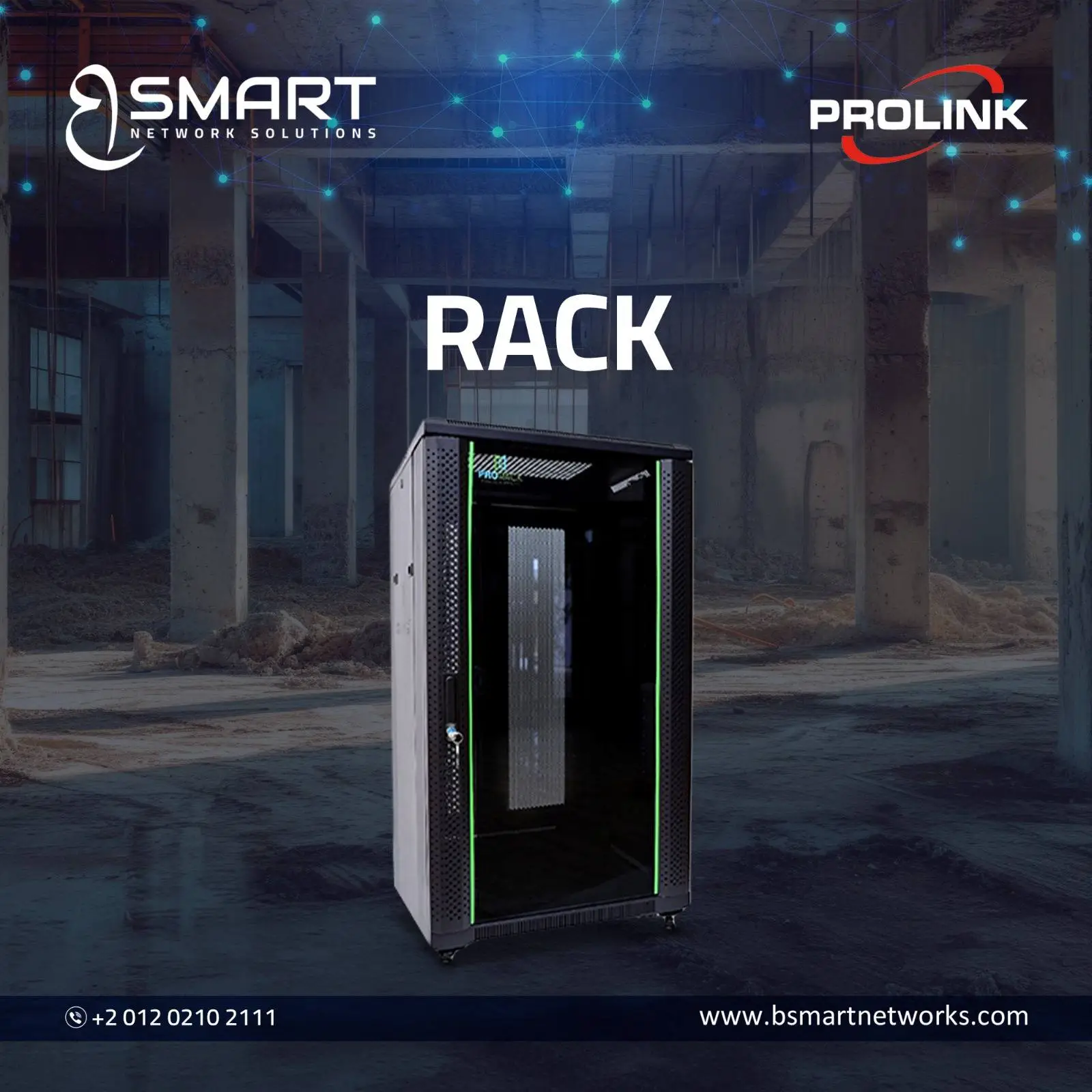
Before comparing options, it helps to clarify what is a network rack cabinet. It’s a standardized enclosure built to EIA-310 compliance, designed to mount 19-inch IT equipment such as switches, routers, servers, and PDUs in defined rack units (U-capacity).
Beyond organization, a rack cabinet’s job is to manage heat, protect equipment, and allow structured growth—critical in Egypt’s warmer climate and power conditions.
How Network Racks Work (Operational View)
Network rack explained from an engineering standpoint: equipment is mounted vertically on rails using standardized U-spacing (e.g., 18U, 27U, 42U). The cabinet’s structure—typically cold-rolled steel—provides rigidity and grounding.
Key functional elements include:
- Airflow management: perforated doors, fan trays, and clear exhaust paths
- Cable management: vertical/horizontal organizers to prevent airflow blockage
- Power distribution: PDU mounting for clean, centralized power
- Load capacity: rated frames to support servers and UPS safely
When done right, cooling efficiency improves and maintenance time drops.
Types of Network Racks by Installation
Standing vs Wall Mount Rack (Most Common Choice)
Understanding the difference between standing and wall mount rack options is essential for correct sizing and budgeting.
- Floor-mounted, high load capacity
- Support servers, UPS systems, and PDUs
- Typical sizes: 18U, 27U, 42U
- Best for server rooms and scalable networks
Wall Mount Racks
- Fixed to walls, space-saving
- Limited depth and load capacity
- Suitable for switches, CCTV NVRs, small offices
For most commercial deployments, standing racks provide better long-term value.
Types of Network Racks by Size (U-Capacity)
U-capacity defines how much equipment a rack can host—and how much heat it must dissipate.
- 18U: Branch offices, CCTV rooms, compact IT closets
- 27U: Growing businesses with mixed networking and servers
- 42U: Server rooms and data-heavy environments
Choosing the right size reduces future replacement costs and improves airflow planning.
Buying Factors That Matter in Egypt
When comparing options—or planning to buy ProRack network rack solutions—prioritize factors that affect total cost of ownership:
- Cooling design: front perforation, fan support, clear exhaust
- Steel quality: thicker cold-rolled steel resists heat and vibration
- Load rating: ensure headroom for servers and UPS growth
- Local supply: faster replacements, valid warranty, on-site support
Expert Insight:
“We see cooling bills drop after upgrading to better cabinets. Proper airflow costs more upfront but saves far more in energy and hardware failures over time.”
— Internal Networking Expert, 15+ years field experience
Supplier & Brand Considerations (BoFu)
Procurement teams often compare listings like ProRack rack cabinet for sale or evaluate ProRack network rack price online. The differentiator is authorized local supply.
Working with an established network rack cabinet supplier Egypt ensures:
- Genuine configurations aligned with specs
- Availability of accessories and spare parts
- After-sales support across multi-site deployments
Teams standardizing on ProRack Egypt solutions often do so via experienced integrators such as Bsmart Networks, where consultation and lifecycle support are part of the engagement.
Final Takeaway
Choosing among network rack options is an infrastructure decision, not a commodity purchase. Size, installation type, airflow, and supplier reliability directly impact uptime and operating costs—especially in Egyptian environments.
Define your load, heat profile, and growth plan first. Then select the rack type that supports those realities. For many B2B buyers, that path leads to professionally specified standing racks from trusted local partners.