










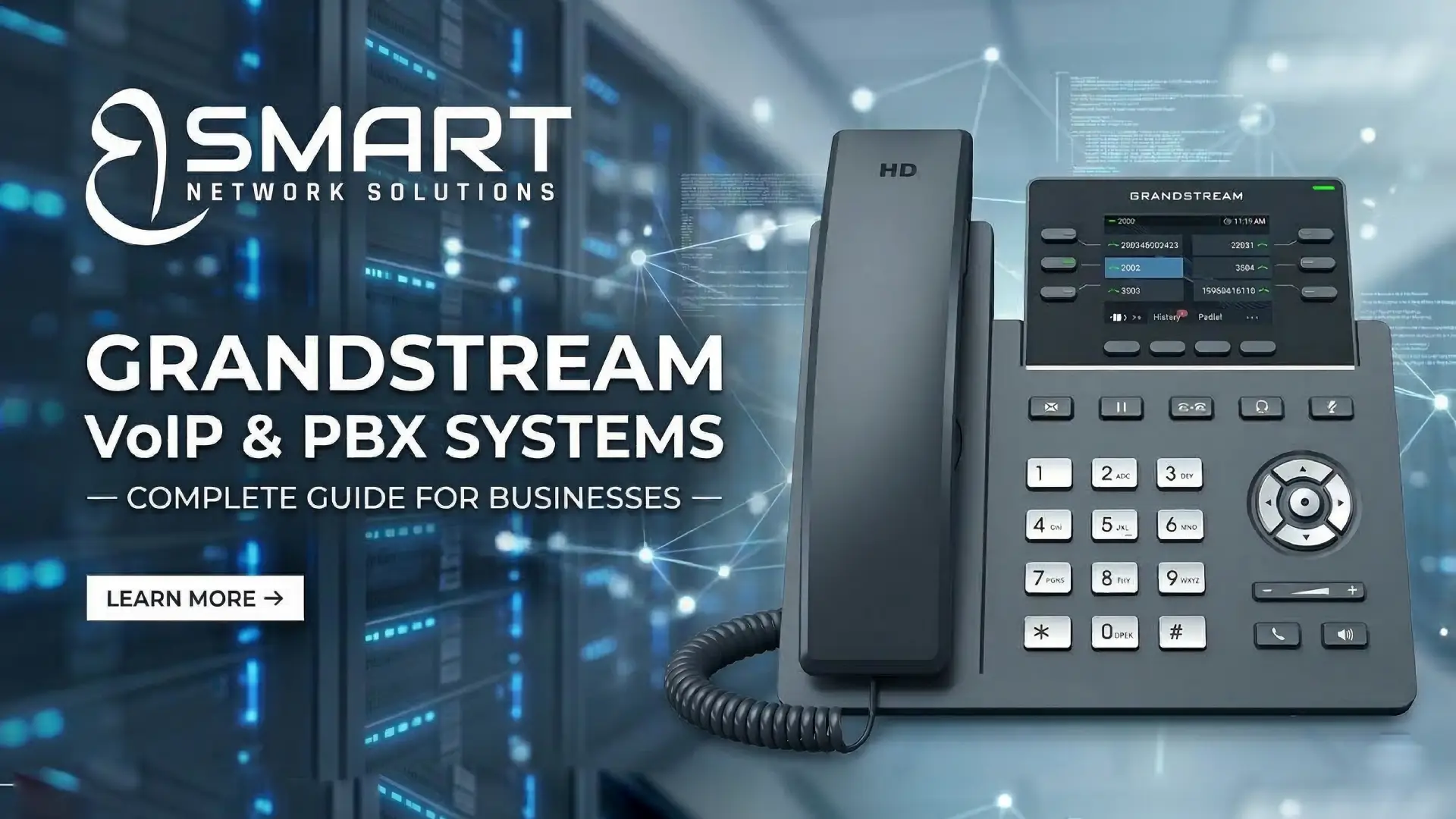
Grandstream VoIP & PBX Systems — Complete Guide for Businesses

Upgrading your company’s communication network is a major operational decision. Traditional copper-wire phone lines are expensive, inflexible, and increasingly obsolete. Today, IP telephony is the undisputed standard for modern enterprises.
In Egypt, companies require voice solutions that are reliable, scalable, and easy to maintain. You need hardware that handles high call volumes without burdening your IT budget with hidden licensing fees.
This is where Grandstream enters the picture. This Grandstream VoIP & PBX Systems — Complete Guide for Businesses will walk you through exactly how to design, select, and deploy the right unified communications infrastructure for your local operations.
What is a Grandstream VoIP & PBX Systems?
An IP PBX (Private Branch Exchange) is the central brain of your office phone network. Instead of routing calls through traditional telecom cables, it uses your local data network and internet connection to manage voice traffic.
A Grandstream IP PBX connects your internal desk phones, routes incoming calls via SIP trunks, and manages features like voicemail, call recording, and Interactive Voice Response (IVR) menus. It unifies all your communications into a single, manageable appliance.
Navigating the Egyptian Hardware Market
Operating IT infrastructure in Egypt presents unique environmental and logistical challenges. Import availability fluctuates rapidly, and the gray market is flooded with unverified hardware. Buying unauthorized equipment often leaves you stranded without firmware updates, local warranty support, or replacement parts.
Furthermore, the local climate demands serious attention to hardware operating conditions. Summer temperatures in Cairo and industrial zones mean your networking gear must be managed carefully. Balancing your budget with proper heat-management is critical for system longevity. Always source your core communications hardware from authorized local distributors to ensure you receive genuine, climate-ready equipment.
Grandstream UCM6200 Series Overview vs. The Modern Standard
For years, the UCM6200 series was the workhorse of the local SME market. A basic Grandstream UCM6200 series overview highlights its success: it provided robust call routing, seamless endpoint provisioning, and—most importantly—zero licensing fees. It allowed businesses to scale up to 500 users without paying extra for software features.
However, business needs have evolved. Remote work, video conferencing, and mobile integration are no longer optional. While the 6200 series remains reliable for pure voice needs, it has been largely superseded.
Today, forward-thinking IT managers are looking to buy Grandstream UCM6300 Cairo editions. The newer UCM6300 series supports a massive ecosystem of unified communications. It integrates natively with mobile apps, handles heavy video traffic, and supports up to 3000 users.
Physical Infrastructure: Housing Your PBX Securely
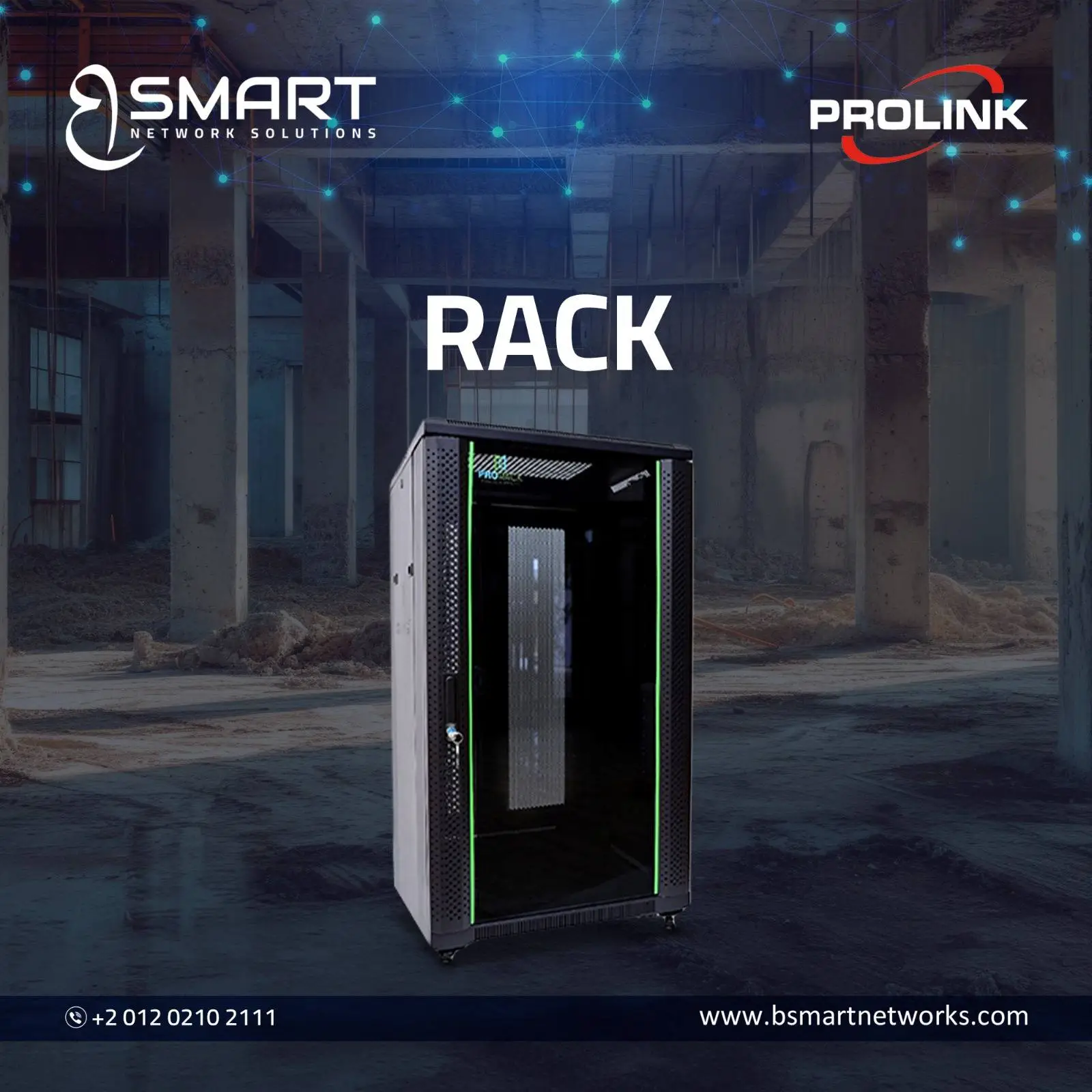
Your IP PBX does not operate in a vacuum. It sits alongside PoE (Power over Ethernet) switches, routers, and firewalls. Because Grandstream IP phones draw their power directly from these switches, the network rack generates significant heat.
Choosing the right enclosure for your VoIP server and network switches is vital. Here are the key buying factors to consider for your server room:
- Cooling: Proper ventilation and active fans prevent your PBX processor from thermal throttling and failing during peak business hours.
- Security: Locking cabinets protect your core communication lines from unauthorized access and accidental tampering.
- Size: Select a rack with enough U-space to comfortably house your current PBX and switches, while leaving room for future expansion.
“Never cut corners on your physical infrastructure. Investing in a quality rack saves money on server cooling in the long run. It extends the lifespan of your PBX and PoE switches by preventing the heat buildup that destroys internal components.”
— Senior Infrastructure Architect, Bsmart Networks
Choosing the Best Grandstream IP Phone for Office (GXP vs GXV)
Deploying a powerful PBX is only half the battle. You must pair it with the right endpoints for your staff. Choosing the best Grandstream IP phone for office (GXP vs GXV) depends entirely on the user’s daily workflow.
The GXP Series: Reliable and Cost-Effective
The GXP line features traditional, high-performance IP desk phones. These are perfect for general staff, customer service agents, and warehouse managers. They offer HD audio, programmable speed-dial keys, and rugged build quality. For high-volume receptionists, models with large color screens and extension modules are ideal.
The GXV Series: Smart Video Collaboration
The GXV line represents the premium tier. These are smart video phones running the Android operating system. They feature built-in cameras, touchscreens, and Wi-Fi connectivity. GXV phones are designed for executives and boardroom desks, allowing one-touch video conferencing and access to custom Android business apps.
Grandstream vs Cisco VoIP Phones Comparison
When planning an enterprise deployment, procurement officers often compare industry giants. A thorough Grandstream vs Cisco VoIP phones comparison reveals stark differences in total cost and network philosophy.
Cisco produces excellent, enterprise-grade hardware. However, their ecosystem is notoriously rigid. They typically require expensive, recurring per-user licensing fees just to unlock basic PBX features.
Grandstream takes a different approach. They offer an open-standard, zero-licensing-fee model. All features—from call recording to mobile app integration—are included out of the box.
| Feature | Grandstream | Cisco |
| Licensing Fees | Zero recurring fees | High per-user licensing required |
| Setup Complexity | Intuitive web GUI, fast provisioning | Complex, often requires certified engineers |
| Hardware Cost | Highly competitive | Premium pricing |
| Total Cost of Ownership | Very Low | High |
For Egyptian businesses operating on strict capital expenditure budgets, Grandstream provides enterprise-level features at a fraction of the legacy hardware cost.
Beyond Voice: How Do Grandstream IP Cameras Work?
Modern communication extends beyond desk phones. Facility security and voice networks are now deeply integrated. IT managers frequently ask: how do Grandstream IP cameras work within a VoIP environment?
Grandstream IP cameras are SIP-enabled. This means the camera acts just like another phone extension on your IP PBX network.
When integrated, a security guard can dial the camera’s specific extension from their GXV video phone to instantly view a live feed. Furthermore, Grandstream facility access systems (like SIP door cameras) can ring your receptionist’s desk phone. The receptionist can speak to the visitor via two-way audio and press a button on their phone to unlock the physical door.
guide to the grandstream grp2601 basic ip phone.
Why Choose Grandstream BSMART Networks?
Designing and deploying a unified communications network requires deep technical expertise. Sourcing the hardware is just step one. You need a partner who understands local infrastructure, network security, and seamless integration. Grandstream VoIP & PBX Systems provide a powerful and scalable foundation for businesses looking to modernize their communication infrastructure with reliable IP telephony solutions.
With over 15 years of hands-on experience in the MENA region, we bridge the gap between complex IT systems and your business goals. A Grandstream BSMART Networks deployment guarantees that you are receiving genuine, warrantied hardware tailored to the Egyptian environment. We handle the entire lifecycle—from initial site surveys and SIP trunk configuration to staff training and ongoing technical support.
You do not just need a vendor; you need a strategic IT partner. We ensure your voice network is secure, crystal clear, and built to scale alongside your company.