


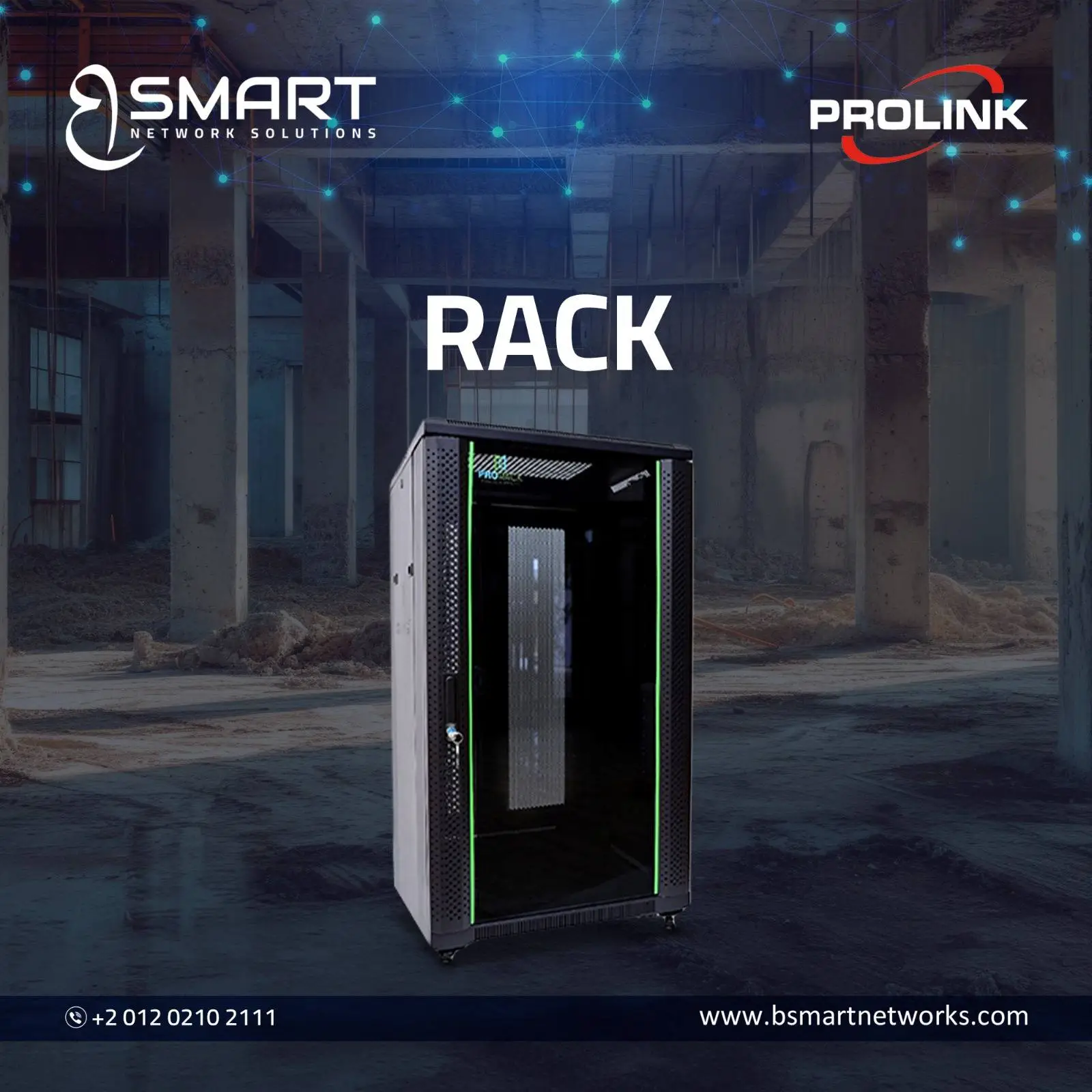








What Is a Network Rack Cabinet?


In Egypt, server rack pricing is mainly dictated by rack size (U-capacity), steel quality, load capacity, cooling design, accessories (fans, PDUs), and whether the rack is sourced from an authorized local supplier with warranty support.
Understanding the Role of a Network Rack (Network Rack Explained)
A network rack cabinet is a standardized enclosure designed to securely house IT equipment such as switches, routers, servers, patch panels, and power components. It follows EIA-310 compliance, ensuring compatibility with 19-inch enterprise hardware.
In practical terms, a rack cabinet solves four core problems:
- Organization: Structured mounting by U-capacity (e.g., 18U, 27U, 42U)
- Protection: Locking doors, grounded frames, and rigid construction
- Cooling efficiency: Controlled airflow management to reduce heat buildup
- Scalability: Room for future expansion without redesigning the space
In Egyptian commercial environments—where ambient temperatures and power stability can be challenging—the rack cabinet is not optional infrastructure; it’s a reliability component.
How Network Racks Work (From an Engineering View)
Network racks work by vertically mounting equipment in standardized rack units (U). Each device is secured to adjustable rails, while cable management channels keep copper and fiber runs organized.
Key technical elements include:
- Cold-rolled steel frames for higher load capacity
- Airflow management using perforated doors and fan trays
- PDU (Power Distribution Unit) mounting for clean power delivery
- Grounding points to protect sensitive electronics
When designed correctly, a rack improves thermal performance and simplifies maintenance—two factors that directly reduce downtime.
Types of Network Racks Used in Egypt
Standing vs Wall Mount Rack (Key Differences)
The difference between standing and wall mount rack options comes down to load, space, and serviceability.
- Floor-mounted with high load capacity
- Support servers, UPS systems, and PDUs
- Preferred for server rooms and enterprise networks
Wall Mount Racks
- Space-saving, fixed to walls
- Suitable for switches and small CCTV setups
- Limited depth and load capacity
For most B2B buyers, standing racks provide better long-term value, especially where future growth is expected.
Choosing the Right U-Capacity (18U, 27U, 42U)
Selecting the correct size is a commercial decision as much as a technical one.
- 18U: Ideal for branch offices, CCTV rooms, and compact IT closets
- 27U: Balanced option for growing businesses
- 42U: Standard for server rooms and data-heavy environments
Many buyers searching for a network rack cabinet supplier Egypt start with 18U standing racks because they balance cost, footprint, and expansion potential.
Buying Factors That Matter in the Egyptian Climate
When evaluating options—especially if you plan to buy ProRack network rack solutions—focus on:
- Load capacity: Avoid under-rated frames that flex over time
- Cooling design: Front perforation, fan support, and airflow paths
- Steel thickness: Cold-rolled steel performs better under heat
- Supplier support: Local stock and warranty matter more than brochure specs
Expert Insight:
“In Egypt, poor airflow costs more than the rack itself. We’ve seen cooling bills drop after upgrading to a better-designed cabinet because airflow was finally controlled.”
— Senior Infrastructure Consultant, 15+ years field experience
Brand Considerations and Local Availability
Many procurement teams compare listings such as ProRack rack cabinet for sale or check ProRack network rack price online. What often makes the difference is sourcing through an authorized channel.
Working with established integrators like Bsmart Networks ensures:
- Access to the ProRack official product range
- Correct sizing and configuration advice
- Local after-sales support
In practice, Bsmart Networks ProRack deployments are chosen for consistency across multi-site projects—reducing maintenance complexity over time.
Final Takeaway for Decision-Makers
A network rack cabinet is not a commodity box. It’s a structural and thermal component of your IT infrastructure. Choosing the right type, size, and supplier directly affects uptime, cooling costs, and scalability.
For Egyptian B2B buyers, the smartest approach is consultative: define your load, environment, and growth plan first—then select a rack that supports those realities, not just the lowest price tag.