












Choosing the Right Hardware: Grandstream vs Cisco IP Phones in Egypt

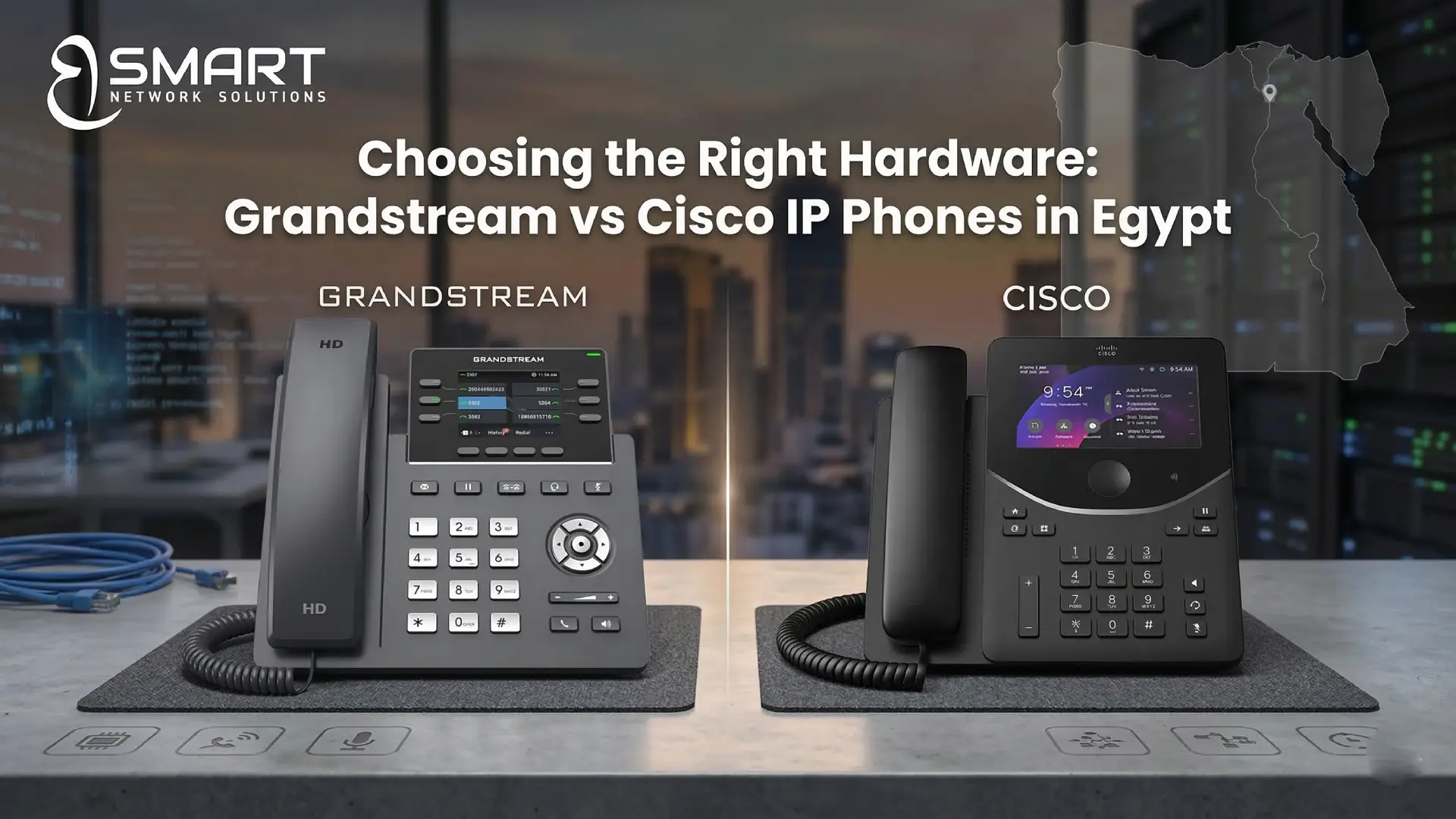
Upgrading your corporate communication infrastructure is a critical, high-stakes decision. When evaluating Grandstream vs Cisco IP Phones, IT managers face a clear choice. You must balance upfront capital expenditure with long-term system reliability. Both brands deliver exceptional audio quality and strong networking capabilities. However, they serve very different operational needs, budgets, and technical environments.
Navigating the Egyptian enterprise hardware market requires a highly strategic approach. Import constraints, NTRA approval processes, and customs delays often make hardware availability unpredictable. Currency fluctuations also make recurring software licenses a heavy burden for local IT budgets. Additionally, Egypt’s hot climate and dusty environments demand careful attention to how your backend infrastructure handles stress. Buying from local authorized suppliers is not just about avoiding gray-market goods. It is strictly necessary to secure valid warranties and ensure rapid hardware replacement.
Grandstream vs Cisco IP Phones: Core Architectural Differences
Cisco remains the legacy standard for massive, multinational enterprises. It offers unmatched zero-trust security protocols and integrates seamlessly with existing Cisco network architectures. However, Cisco systems operate on proprietary protocols. They often require expensive, recurring licensing fees for every handset and feature activated on the network.
Grandstream takes a radically different approach. It provides a robust, license-free, open-standard SIP ecosystem. This makes it highly attractive for the Egyptian market. If you read any recent grandstream ucm6300 series review, you will immediately notice the massive operational cost savings. Grandstream delivers premium backend features without the heavy enterprise price tag. It is a powerful, scalable choice for Enterprise VoIP & Unified Communications (Grandstream) deployments across the MENA region.
Key Buying Factors for Local Deployments
When choosing between these systems, you must look well beyond the plastic handset. Consider the entire network footprint:
- Licensing and TCO: Cisco requires ongoing payments for basic communication functionality. Grandstream is a one-time hardware purchase with free, lifetime firmware updates.
- Backend Cooling & Power: Deploying hundreds of phones requires heavy-duty Power over Ethernet (PoE) switches. These switches generate massive heat inside your telecom closet.
- Power Continuity: Egypt’s localized power grids require robust UPS (Uninterruptible Power Supply) integrations. Your PBX servers must stay online during unexpected cuts.
- Physical Footprint: Consider the desk space required for executive phones and the physical rack space needed for localized PBX appliances.
Optimizing the High-Volume Call Center
Many procurement officers search for the best ip phone for call centers but forget the infrastructure powering them. High-volume environments require rapid call routing, deep CRM integration, and durable hardware. Cisco offers premium analytics for massive call centers, but at a steep cost. Grandstream provides built-in call center features directly on their local appliances at no extra charge. This includes call queues, automated recording, and real-time agent metrics.
The Hidden Infrastructure Burden
IP phones rely entirely on your core network closet. Adding fifty or a hundred PoE devices changes the thermal dynamics of your server room. Cisco and Grandstream endpoints both draw continuous power from your switches.
“Many IT managers overlook the backend hardware when deploying VoIP networks. Investing in a high-quality server rack with proper airflow management saves substantial money on server cooling in the long run. When your PoE switches work overtime to power a massive IP phone fleet in the Egyptian summer, a cheap rack leads directly to thermal throttling and hardware failure.” — Senior Infrastructure Engineer
Implementation, Configuration, and Local Support
When considering Grandstream vs Cisco IP Phones, implementation speed is just as important as the hardware you buy. Cisco networks generally require specialized, certified engineers for deployment and configuration. This adds significant labor costs and time delays to your initial rollout.
Grandstream is notably faster to deploy. Your internal IT team can easily follow a standard grandstream ip pbx setup guide to get the local network running quickly. Its web-based GUI is highly intuitive and heavily reduces your reliance on expensive external consultants.
At Bsmart Networks, we bring over 15 years of hands-on IT infrastructure and data center design experience to the MENA region. We do not just sell telecom handsets. We design complete, climate-resilient network ecosystems. As an authorized provider, a Bsmart grandstream deployment guarantees genuine, NTRA-approved hardware. We provide localized support and an architecture designed specifically for the Egyptian business landscape. We ensure your switches, PBX servers, and endpoints operate flawlessly together under heavy daily loads.